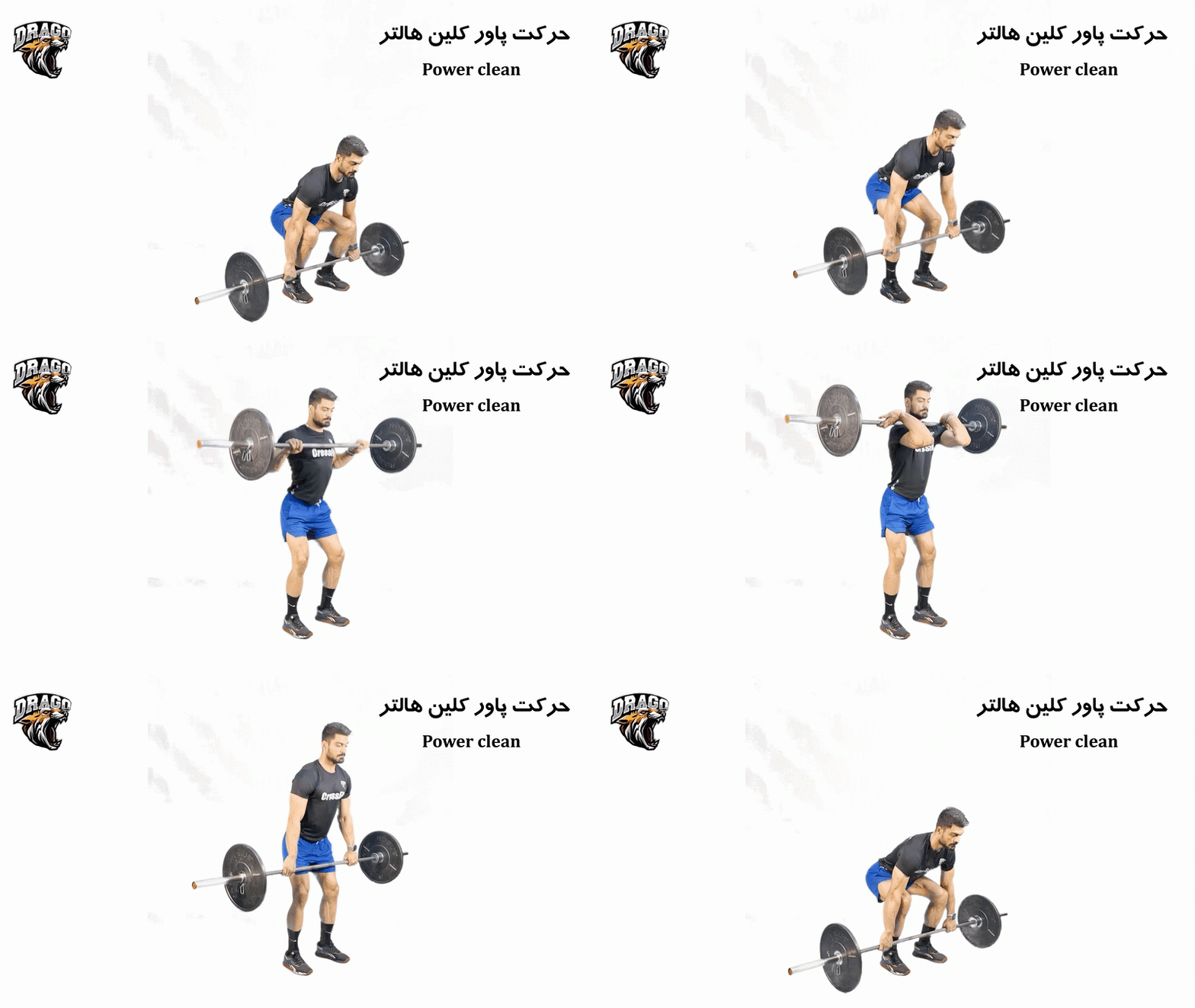
The Power Clean is one of the foundational movements in weightlifting and CrossFit training. It’s highly popular due to its effectiveness in developing strength, speed, and muscular coordination. This compound lift engages both the upper and lower body simultaneously, making it an essential exercise for athletic performance. In this article, we’ll review the proper technique, benefits, and common mistakes associated with the power clean.
Proper Steps for Performing the Barbell Power Clean
- Stand with feet hip-width apart.
- Grip the bar slightly wider than shoulder-width using a hook grip.
- Keep your back flat and chest up.
- Look forward and brace your core.
- Lift the bar off the floor in a controlled motion.
- Raise the hips and shoulders simultaneously.
- Maintain back angle and avoid pulling with the arms.
- Once the bar reaches mid-thigh, explode upward using your hips and knees.
- Shrug the shoulders and fully extend the body quickly.
- Triple extension (ankles, knees, hips) helps lift the bar higher.
- Immediately rotate the elbows forward and receive the bar on the front shoulders.
- Slightly bend the knees into a partial squat to absorb the load.
- Keep the spine neutral and elbows high.
- Stand up from the quarter squat and stabilize the bar in the front rack.
- Lower the bar slowly and reset for the next rep.
Suggested reading: What is CrossFit?
Benefits of the Barbell Power Clean
The barbell power clean is a powerful tool for improving explosive strength and sports performance. It significantly enhances muscular power, particularly for athletes requiring speed, jumping ability, and rapid acceleration. As a compound movement involving multiple joints and muscle groups, it strengthens neuromuscular coordination and improves complex motor skills. It also develops grip strength and wrist/forearm endurance due to frequent bar handling. For these reasons, the power clean is a staple in the training routines of athletes in football, basketball, track and field, and other high-performance sports.
Common Power Clean Mistakes
- Lifting the bar with the arms: The arms should guide, not pull the weight.
- Not fully extending the hips: Incomplete hip extension reduces force transmission.
- Slow elbow rotation: Fast elbows are critical for clean bar reception.
- Poor bar positioning on the shoulders: Improper rack can strain the wrists.
Difference Between Power Clean and Hang Power Clean
| Feature | Power Clean (Barbell) | Hang Power Clean (Barbell) |
|---|---|---|
| Starting Position | From the floor | From the hang position (above knees or mid-thigh) |
| Range of Motion | Larger – includes first and second pull | Shorter – focuses on second pull only |
| Muscle Involvement | Engages full posterior chain from the start | Emphasizes hip drive and upper-body control |
| Technical Difficulty | Higher – requires proficiency in full pull and transition | Lower – suitable for learning second pull and coordination |
| Training Goal | Develop total-body explosive power from the floor | Focus on speed, power generation, and technique |
| Best For | Advanced athletes and full-strength workouts | Beginners to intermediates, technical work, or warm-ups |
Suggested tutorial: How to Do a Burpee
Conclusion
The power clean is one of the most effective exercises for building strength, speed, and muscular coordination. With correct technique and avoidance of common errors, you can gain numerous benefits from this lift. Beginners are advised to start with light weights and train under the supervision of a certified coach.
Keep reading